#125: Raising More Than Livestock: Building a Multi-Generation Direct-to-Consumer Farm Business
“You can’t raise a cow that only has steaks on it — it doesn’t exist.” - Mikaela Schultz
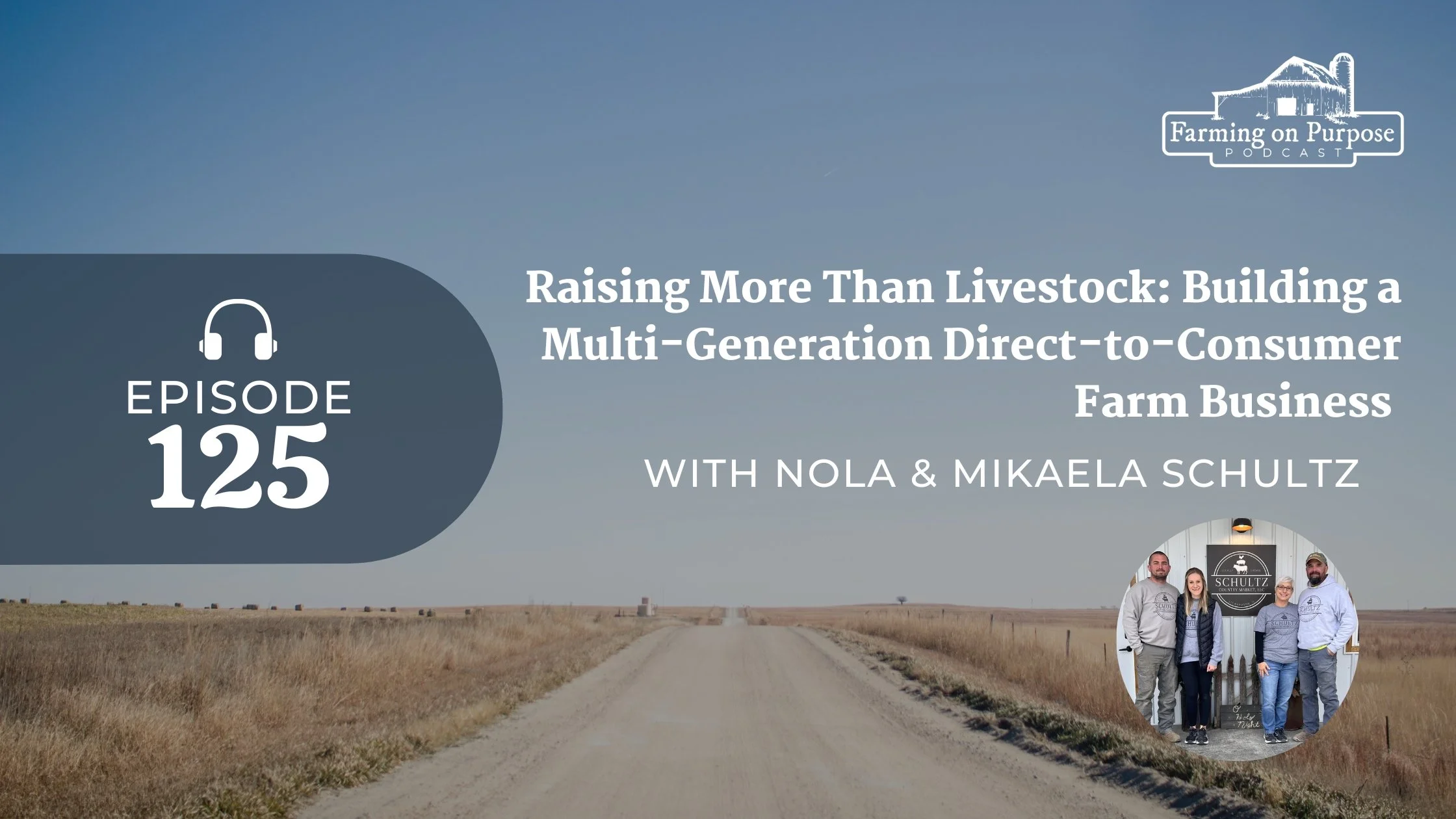
This episode of Farming on Purpose features a powerful, honest conversation with Nola and Mikaela Schultz, a mother-in-law and daughter-in-law duo building Schultz Country Market alongside their multi-generation family farm.
From navigating processing challenges and pricing realities to marketing meat, raising kids, and preserving family relationships, this episode pulls back the curtain on what it really takes to build a direct-to-consumer business that supports both the farm and the family behind it.
From a Fourth-Generation Farm to a Farm Market
Nola entered the Schultz family farm in 1992 when she married Brian, joining a fourth-generation operation rooted in both row crops and livestock. Years later, when their son Austin married Mikaela, the next generation stepped fully into the operation — financially, operationally, and eventually entrepreneurially.
The idea for Schultz Country Market didn’t appear overnight. For years, the family talked about diversification — pumpkins, flowers, worms, agritourism — but timing and clarity were always missing.
That changed when their local locker plant closed.
Instead of seeing it as a loss, the Schultzes saw an opportunity. In September of 2023, they opened an on-farm market designed to sell individual cuts of beef and pork directly to consumers, creating access for families who didn’t want — or couldn’t afford — a whole or half animal at once.
Dividing Roles and Playing to Strengths
Launching the market required more than livestock — it required coordination.
Nola leaned into research and logistics. Mikaela stepped into technology, systems, website setup, and social media. Their husbands focused on animal care, feeding, and daily labor — with help from the next generation.
Even the kids play a role, hauling bedding, helping load hogs, and growing up inside the business. What emerged wasn’t just a market — it was a truly integrated family operation.
“We don’t all do the same jobs,” they shared. “But we all work together.”
Processing: The Biggest Bottleneck in Direct-to-Consumer
If there’s one challenge that dominates the direct-to-consumer conversation, it’s processing — and the Schultzes don’t shy away from it.
They’ve worked with four to five different processors, traveling hours, navigating retail labeling requirements, pricing surprises, packaging standards, and communication gaps.
Their advice to producers?
Treat processors like business partners:
Visit in person
Ask detailed questions
Test products
Communicate expectations clearly
Be willing to walk away if it’s not the right fit
“You’re not just dropping off an animal,” Nola explained. “You’re trusting someone with months — sometimes years — of work.”
Pricing Isn’t About Walmart
Early on, the Schultzes made the mistake many producers do: comparing their prices to grocery stores and other farms.
Eventually, they realized they weren’t selling the same product.
They weren’t boxed meat. They weren’t anonymous supply chains. They were selling:
Traceability
Quality
Customer relationships
Up-front processing costs
Inventory risk
Half of every beef comes back as hamburger. Steaks sell fast. Bacon always runs out. Pricing had to reflect reality, not comparison.
Making Inventory Work for the Market
To manage supply and cash flow, the Schultzes leaned into:
Bundles designed to move hamburger
Value-added products like snack sticks and summer sausage
Holiday boxes and pre-orders
Strategic sales when inventory sat too long
Vacuum packaging helped extend shelf life, while creativity helped move product — even when margins were tight.
Sometimes, selling at a small loss beat letting meat sit unsold.
Marketing That Feels Human
At first, marketing felt uncomfortable — especially Facebook Live.
Now? It’s one of their strongest tools.
Weekly walk-throughs of the market, showing what’s in stock, introducing new bundles, and occasionally featuring kids wandering through the frame helped customers feel connected.
Facebook became their local hub. TikTok expanded their reach far beyond their rural community — even drawing customers from other states.
“If people don’t know what you have, they can’t buy it,” Mikaela said.
Perfection wasn’t the goal. Consistency was.
Faith, Family, and the Long View
Throughout the episode, one theme remains constant: faith.
Their motto — “Trusting the Lord to feed our family and yours” — isn’t marketing language. It’s how they operate.
From crop failures to financial stress to plans that fell apart, the Schultz family learned that closed doors often lead to better ones.
They also emphasized the importance of:
Having hard conversations early
Being transparent about succession and finances
Staying family after the business talks
Giving each generation room to grow into leadership
“You don’t wait until you’re gone to explain your plans,” Nola said. “You do it now.”
Looking Ahead
Next on the horizon for the Schultz? Shipping.
After months of research, processor visits, and planning, the family is preparing to expand beyond Illinois and offer shipped beef and pork directly to customers. It’s a big step — one that opens the door to reaching families who already follow their story online but haven’t been able to shop the market in person.
While shipping isn’t live just yet, the groundwork is being laid now.
👉 To be the first to know when shipping opens, sign up for the Schultz Country Market shipping waitlist at:
https://www.schultzcountrymarket.com
That’s where they’ll share updates, launch details, and early access when shipping officially becomes available.
More from Farming on Purpose
The 8-Hour Marketing Plan is your step-by-step roadmap to a clear, effective strategy—built just for you, in just one day. No more second-guessing or wasted time. Get a plan that fits your business and drives results. Sign up here!
If you are interested in signing up for the Marketing Routine class, do so here!
If you would like to support the podcast or be a part of the conversation join the Farming On Purpose Facebook group and visit the Farming on Purpose merch page.
Check out our favorite software tool for online sales!
Thrivecart is a software tool you can use to design online checkouts with every option you can dream up. You can sell physical and digital products, connect to loads of other softwares you use for your website, accepting payments, email marketing, and more. This is the most powerful tool I use and the lowest cost one. I recommend it for anyone who accepts online payments who wants to increase their revenue or average order value. Learn more about what Theivecart can do for your business here: https://backpocketsocial--checkout.thrivecart.com/thrivecart-standard-account/
I may earn affiliate commissions from links on this page.
Listen wherever you get your podcasts!
About the Host of Farming On Purpose, Lexi Wright:
I’m your host, Lexi Wright. I started the Farming on Purpose Podcast from a passion for sharing the future of production agriculture.
I’m so glad you’re here and I hope you’ll take a moment to join the conversation with me and other listeners on social media.
Connect with me on Instagram, Facebook, and TikTok.
Rate, Review & Follow on Apple Podcasts