#136: Navigating Change, Legacy, and the Future of the Family Farm
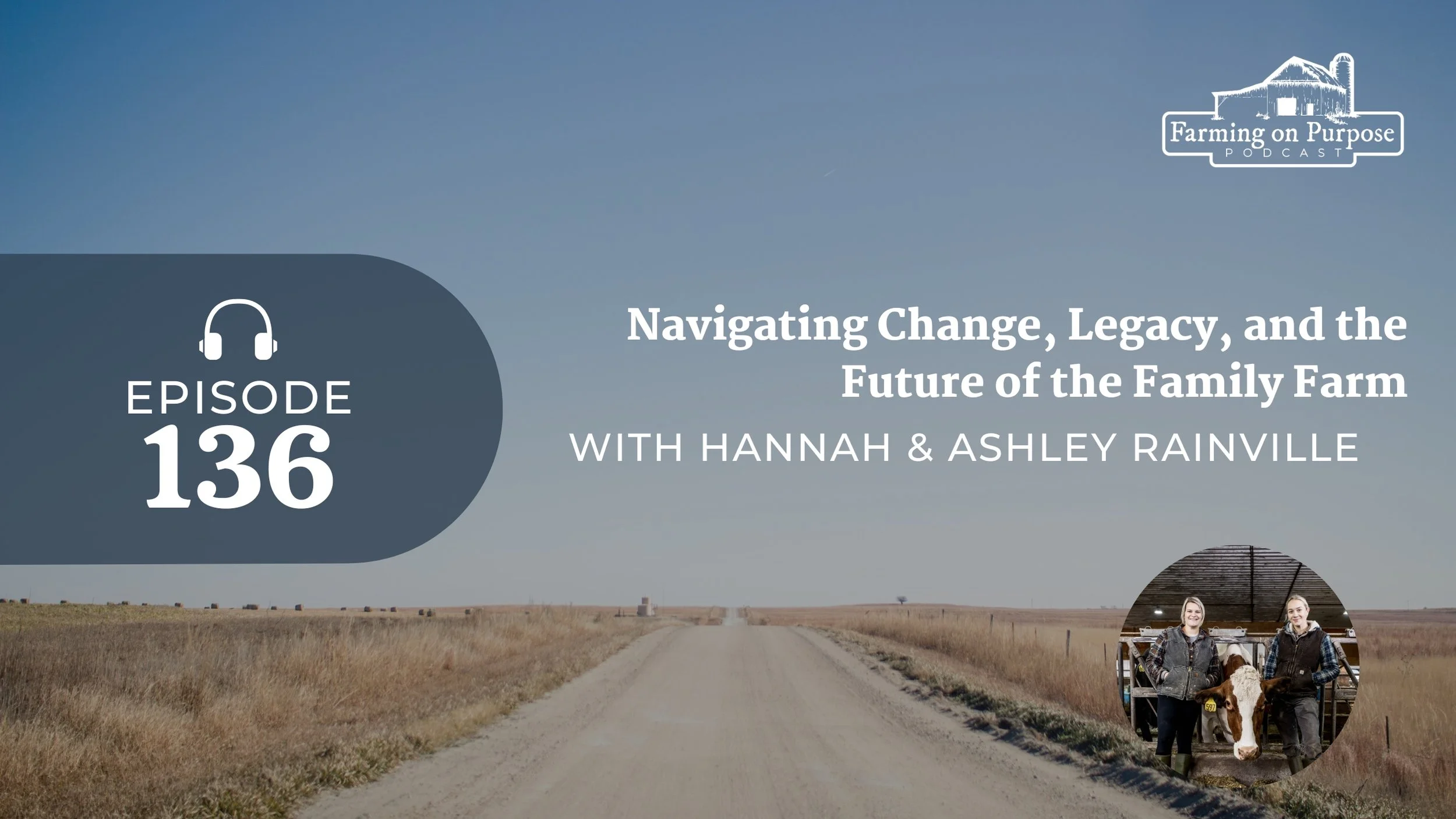
“We have to evolve to keep what we have.”
This episode of Farming on Purpose features a conversation with Hannah and Ashley Rainville, two sisters from a multi-generational dairy farm in northern Vermont who are walking through one of the hardest transitions a farm family can face.
Their story doesn’t begin with a plan to leave dairy. It begins with pressure—slow at first, then all at once. Rising costs, stagnant milk prices, aging equipment, and a system that no longer supports the kind of farm they were raised on eventually forced a question they couldn’t ignore anymore: what does the future actually look like from here?
When the System Stops Working
For generations, the Rainville farm worked the way it was supposed to. At one point, it supported a large family and created a life that felt both sustainable and meaningful. But over time, the gap between what it takes to run a dairy and what it returns has grown wider.
Milk prices have stayed relatively flat, while the cost of everything else—fuel, feed, equipment, labor—has steadily increased. The model that once made sense now requires farmers to either expand, take on more debt, or continue pushing forward under tighter margins each year. It’s not a sudden collapse. It’s a slow squeeze.
For the Rainvilles, that pressure became impossible to ignore during a particularly difficult winter. Equipment failures stacked on top of extreme cold and animal health challenges, and every day seemed to bring a new problem to solve. What used to feel like hard work with purpose began to feel like constant strain with no clear path forward.
The Moment Everything Shifted
There wasn’t one single event that forced a decision. Instead, it was a buildup of moments that made it clear something had to change.
At the center of it all was their dad, who had carried the operation for years. As the challenges compounded, so did the exhaustion. The joy that once came from the work wasn’t there in the same way, and that shift was hard to ignore.
The question stopped being about how to keep everything going at all costs. It became more honest than that. It became: is continuing down this exact path actually the right decision for our family?
That’s a question many farmers feel, but very few say out loud.
Letting Go Without Losing Everything
Deciding to sell the herd was not about walking away from the farm. It was about protecting it.
By stepping away from dairy at this point, they created an opportunity to reset. It allowed them to pay off debt instead of continuing to roll it forward, and it ensured they could keep the land intact rather than risking having to sell pieces of it later just to stay afloat. The decision shifted from feeling like an ending to becoming a way to preserve what mattered most.
It reframed everything. The farm itself wasn’t disappearing. It was being given a chance to continue—just in a different form.
Redefining Legacy
For their dad, this decision carried the weight of generations. When something has been built over decades and passed down through family, stepping away from part of it can feel like failure.
But Hannah and Ashley see legacy differently. To them, it’s not about preserving every detail of the past exactly as it was. It’s about making decisions that allow the farm to continue into the future, even if that means changing what it looks like along the way.
The land is still there. The knowledge is still there. The work ethic, the values, the history—none of that disappears just because the cows do. In many ways, this decision protects those things rather than risking them.
Seeing a Future Beyond the Cows
Even before this transition, they had started to explore what else the farm could become.
Last year, they began experimenting in small ways—planting a garden, raising chickens and pigs, learning how to produce more of their own food. At the time, it wasn’t a full business plan. It was curiosity, combined with a desire to reconnect with a different side of farming.
But those small steps changed how they saw the future. What started as something for their own family quickly revealed potential beyond that. They realized they weren’t limited to one version of what the farm had to be.
Building a New Model of Farming
Now, instead of focusing on scaling up dairy, they’re building toward something more flexible and diversified.
Their plans are still evolving, but the direction is clear. They’re expanding their garden, working toward selling fresh produce locally, and raising animals in a way that allows them to connect directly with their customers. There’s interest in creating a farm stand and eventually exploring experiences that bring people onto the farm, whether that’s seasonal events or agritourism.
It’s not about replacing one system with another overnight. It’s about building something layer by layer—something that spreads risk, creates more stability, and gives them more control over how their farm operates.
Why This Matters Beyond One Farm
What makes their story important is that it’s not unique.
Across agriculture, many farms are facing the same reality. The traditional model—high input costs paired with commodity pricing—has become increasingly difficult to sustain, especially for small and mid-sized operations. At the same time, consumer expectations are shifting. People want to know where their food comes from. They want connection, transparency, and trust.
The Rainvilles are stepping into that shift instead of resisting it.
They’re not just reacting to pressure. They’re positioning themselves for what agriculture is becoming.
Family as the Foundation
Through every conversation and every decision, one thing has stayed consistent: family comes first.
Not the cows. Not the system. Not even the business model itself.
That clarity made it possible to make a decision that so many struggle with. Because when the priority is clear, the path forward—while still difficult—becomes easier to navigate.
A Different Kind of Opportunity
What they’ve created through this transition is something many farms don’t get the chance to have.
They now have land without the burden of overwhelming debt, which gives them room to build something new with intention. They have time to invest in different ideas, instead of being locked into a system that demands everything just to maintain itself. And through their content, they’ve built an audience that is watching and supporting them as they figure it out in real time.
That combination—time, land, and flexibility—is rare.
And it only exists because they were willing to make a hard decision before it was too late.
Where to Follow Their Journey
You can follow Hannah and Ashley as they document this transition and build what’s next on TikTok and Facebook under RainvilleRizzz.
Their content offers an honest look at what this process actually looks like—not just the highlights, but the reality of figuring it out day by day.
More from Farming on Purpose
The 8-Hour Marketing Plan is your step-by-step roadmap to a clear, effective strategy—built just for you, in just one day. No more second-guessing or wasted time. Get a plan that fits your business and drives results. Sign up here!
If you are interested in signing up for the Marketing Routine class, do so here!
If you would like to support the podcast or be a part of the conversation join the Farming On Purpose Facebook group and visit the Farming on Purpose merch page.
Check out our favorite software tool for online sales!
Thrivecart is a software tool you can use to design online checkouts with every option you can dream up. You can sell physical and digital products, connect to loads of other softwares you use for your website, accepting payments, email marketing, and more. This is the most powerful tool I use and the lowest cost one. I recommend it for anyone who accepts online payments who wants to increase their revenue or average order value. Learn more about what Theivecart can do for your business here: https://backpocketsocial--checkout.thrivecart.com/thrivecart-standard-account/
I may earn affiliate commissions from links on this page.
Listen wherever you get your podcasts!
About the Host of Farming On Purpose, Lexi Wright:
I’m your host, Lexi Wright. I started the Farming on Purpose Podcast from a passion for sharing the future of production agriculture.
I’m so glad you’re here and I hope you’ll take a moment to join the conversation with me and other listeners on social media.
Connect with me on Instagram, Facebook, and TikTok.
Rate, Review & Follow on Apple Podcasts